
Robots have learnedto walk. Now theyneed your hands.
Film an everyday task from your point of view and get paid for it.
Manipulation — approach, grasp, adjust, release — is learned by watching human hands, and the footage that teaches it barely exists: real homes, bad light, one continuous task. Automata buys that footage clip by clip. A person reviews every submission, and approved ones are paid in USDG on the spot.
from your own eyeline, on your phone
by hand, with a reason either way
flat, per approved clip
The app is in build. Record, check your take, submit and get paid without leaving the camera — the web recorder keeps working meanwhile.
What your clips
actually teach a robot.
Almost all manipulation data on file was captured in a lab: clean bench, even light, one object at a time. Real kitchens are none of those things, and that gap is exactly where robots still fail.
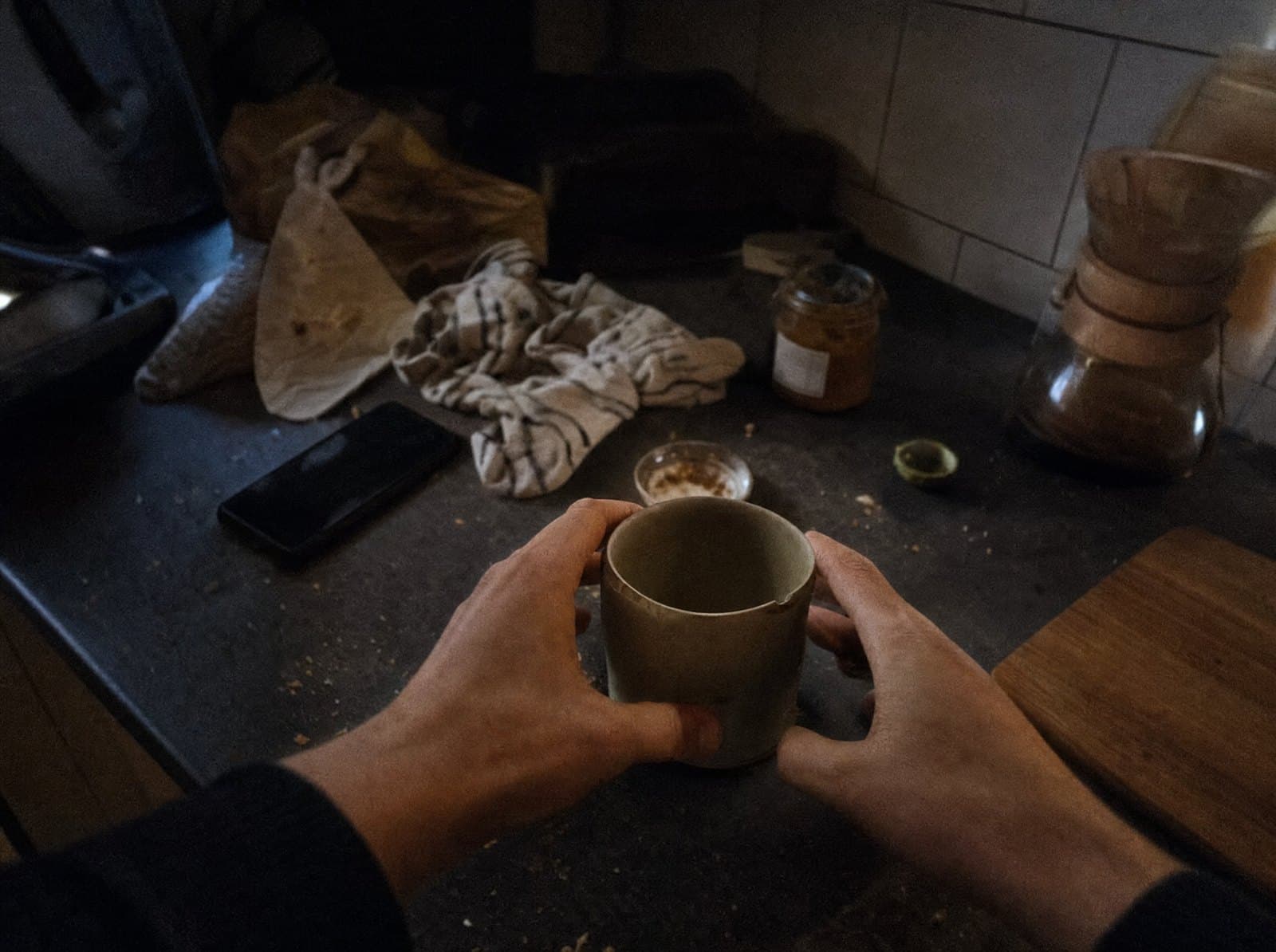 grasp · 00:07occluded
- IFirst person, or it does not transfer
- A camera near your eyeline sees roughly what a robot sees out of its own head. Footage shot from across the room teaches it far less.
- IIWhole tasks, start to finish
- The signal is in the full sequence — approach, grasp, adjust, release. A clip that cuts halfway through teaches almost nothing.
- IIIMessy beats perfect
- Cluttered counters, bad light, awkward angles. Lab data is spotless and that is exactly why models trained on it break in a real kitchen.
- IVKeep the mistakes in
- Dropping something and picking it back up is worth more than a clean take. Recovery is the hardest thing to learn and the rarest thing on file.
Three steps, no
experience needed.
If you can use a phone and you do chores, you already have everything this requires — a phone, a wallet address, and an ordinary task.
- 01
Record from your eyeline
Five to thirty seconds of an ordinary task, shot from where your eyes are. In the browser, or upload something you already have.
Phone at eye level. No editing. No narration.
- 02
A person watches it
Every clip goes to a human reviewer, not a filter. If it is turned down you are told exactly which part failed, and you can shoot it again.
You are told either way, with a reason.
- 03
The chain pays you
Approved clips settle in USDG on Robinhood Chain, straight to your wallet. No minimum balance, no weekly cycle, no invoice.
Every payment is a public transaction.
Every payment is
a public record.
| Clip | Length | Paid | Transaction | |
|---|---|---|---|---|
| Nothing paid yet. The first approved clip lands here, with its transaction. | ||||
One rate.
Every clip.
8.50 USDG for every approved clip, whether it runs five seconds or thirty. No platform cut afterwards, no gas billed back to you, and nothing to pad — film the task, stop when it is done.
Before you
ask.
What am I actually being paid for?
A short, honest recording of you doing something with your hands, filmed from your point of view. That footage becomes training data for robot manipulation models — the part of robotics that is still mostly unsolved because almost nobody has filmed ordinary life from the inside.
What makes a clip get approved?
One continuous task, five to thirty seconds, filmed near your eyeline, with your hands visible and the action finished on camera. Steady enough to see what happened. That is the whole bar.
How much does it pay?
8.50 USDG for every approved clip, flat. A five-second clip and a thirty-second clip pay exactly the same, so there is no reason to pad one — film the task, stop when it is done.
When do I get paid?
As soon as a reviewer approves the clip. There is no minimum balance, no payout cycle and no request to file — the transaction is signed and sent, and you can watch it land on the explorer.
What if my clip is rejected?
You get the reason in writing, in plain language, along with what to change. Rejections cost you nothing and do not count against you, and you can film it again.
What do I need to start?
A phone, a wallet address on Robinhood Chain, and something ordinary to do. No robotics knowledge, no equipment, no application.
What happens to my footage?
It goes into a training corpus for manipulation models. Clips are never resold as media, never attached to your name, and anything with faces, screens or documents in frame is cut or rejected before it enters the set.
Why pay people at all?
Because the alternative is scraped video that nobody consented to and that was never filmed from the right place. Paying for purpose-shot footage is cheaper than the lab rigs it replaces and it is the only version of this that is fair.
Thirty seconds ofyour ordinary dayis worth something.
Film it, send it, get paid in USDG. No application, no equipment, no robotics knowledge — a phone and a wallet address is the whole list.